Sammy Davis Jr. and the Color Line on the Strip
9 min read
He would walk out under the lights and own the room. Sammy Davis Jr. could sing, dance, do impressions, play half a dozen instruments, and tell a joke better than the comics. The crowd, all white, would rise to their feet. And then the show would end, and Sammy would be told he could not stay in the hotel, could not have a drink at the bar, could not lose a dollar at the tables he had just packed.
The star of the evening had to leave by the kitchen. He had to find a bed across town, on the Westside, in a boarding house. This was the deal Las Vegas offered its greatest Black entertainers in the 1950s, and Sammy Davis Jr. was determined to break it.
Welcome on Stage, Nowhere Else
Sammy Davis Jr. arrived in Las Vegas as part of the Will Mastin Trio, a song-and-dance act he had been performing in since childhood. By the early 1950s the trio, powered overwhelmingly by Sammy's extraordinary talent, was landing engagements on the Strip and tearing the roofs off showrooms. The bookings were real. The applause was real. The respect, off stage, was not.
The rules were rigid and humiliating. Black performers could headline but could not stay as guests. They could not eat in the restaurants, drink in the lounges, swim in the pools, or gamble in the casinos where they performed. After the final bow they were ushered out and sent to the segregated Westside to sleep.
Sammy felt every inch of the insult, and he refused to make peace with it. He was not a back-door kind of man. He had clawed his way up from vaudeville stages and Army barracks where he had been beaten for the color of his skin, and he had decided that talent ought to count for something. So he pushed, constantly, against the line.
He demanded to stay in the hotels that hired him. He demanded access to the rooms his name filled. Sometimes he won small concessions, a room here, a table there, because a casino did not want to lose its star attraction. The fight was exhausting and the victories were partial, but he kept making them, one engagement at a time.
The Power of Being Indispensable
Sammy's leverage was simple and brutal in its logic. He was too good to lose. A casino that booked him sold out its showroom, and a sold-out showroom meant a packed casino floor, and a packed floor meant money. When your headliner is that valuable, you start finding it harder to throw him out the back.
He used that leverage relentlessly. He would push for the right to stay where he played, to be treated as the asset he plainly was rather than as a problem to be managed. Each time a hotel bent its rules to keep him happy, it set a precedent, and precedents have a way of spreading. Other performers benefited from doors Sammy had pried open.
His rising national fame multiplied the pressure. By the mid-1950s he was a recording star and a television presence, not just a Vegas act, and a town that humiliated a man that famous risked looking ugly to the whole country. Fame became a weapon, and Sammy aimed it squarely at the color line.
It was never clean and it was never easy. He paid for his defiance in friction and ill will, and the gains came slowly. But the principle he kept hammering, that the man who fills the room deserves to be treated like a human being inside it, was exactly the argument Las Vegas could not answer forever.
The Rat Pack Spotlight
Then came the alliance that changed the optics entirely. Sammy fell in with Frank Sinatra, Dean Martin, and the loose crew that became the Rat Pack, and by 1960 they were filming and performing together in Las Vegas, most famously around the Sands. On stage, Sinatra and Martin treated Sammy as an equal, an indispensable member of the act, the man who could do everything.
Sinatra, in particular, threw his enormous clout behind Sammy. The most powerful entertainer in America made it known that he expected his friend to be treated decently, and a hotel that wanted Sinatra's business learned to extend that to Sammy too. Having the biggest star in the world in your corner moved doors that years of solo pushing could only nudge.
There was an undeniable contradiction baked into the Rat Pack act. On stage they joked about race in ways that have aged badly, and Sammy absorbed cracks that today land as cruel. But the larger fact on the ground was radical for its moment, a Black man standing as a full creative equal alongside the two biggest white stars in the country, in the showrooms of a segregated city, night after night, in front of everyone.
That visibility mattered. Audiences saw it. The town saw it. The spectacle of Sammy Davis Jr. as an equal partner in the hottest act in America made the old back-door rules look not just unjust but absurd.
The Line Comes Down
The pressure Sammy had built up did not exist in a vacuum. It joined a broader civil rights push in Las Vegas, the threat of marches and protests, the negotiations that culminated in 1960 at the old Moulin Rouge, where casino operators agreed to begin desegregating the Strip. The color line that had governed Las Vegas entertainment finally started to fall.
Sammy did not win that fight by himself, and it would be a lie to say otherwise. Desegregation came from organized activists, from local leaders, from economic and political pressure on many fronts. But Sammy Davis Jr. was the human face of the contradiction at the center of it all, the undeniable proof that the rules made no sense, the star who would not quietly accept the kitchen exit.
He kept performing in Las Vegas for decades afterward, an elder statesman of the Strip, in a town that now let him stay in the front and walk through the front and gamble at the front. The kid who once had to sleep across town became one of the defining figures of the city's entertainment history.
I think about the arc of that life and it lands hard. The same man, the same talent, the same city, separated by a few years and an entire moral universe. Sammy Davis Jr. forced Las Vegas to look at the gap between how it treated him on stage and how it treated him off it, and he kept forcing it until the gap closed. That is not just a great career. That is a man who helped change a city.
Frequently asked
How was Sammy Davis Jr. treated in 1950s Las Vegas?
He faced the city's brutal segregation. As a Black entertainer he could headline and sell out Strip showrooms, but he was barred from staying in the hotels, eating in the restaurants, drinking in the lounges, or gambling in the casinos that hired him. He was often sent to the segregated Westside to sleep after performances.
How did Sammy Davis Jr. fight segregation on the Strip?
He used his enormous value as a headliner as leverage, demanding to stay in and access the hotels he filled, winning partial concessions over time. His rising national fame and his partnership with Frank Sinatra and the Rat Pack, who treated him as an equal on stage, increased the pressure on the city's racist rules.
Did Sammy Davis Jr. single-handedly desegregate the Strip?
No. Desegregation came from a broad civil rights effort, including organized activists, local leaders, and the 1960 negotiations at the Moulin Rouge. But Sammy was the most visible embodiment of the contradiction, the indispensable star treated as a second-class citizen, and his persistent refusal to accept the color line helped make the case for change.
More Vegas history

How Steve Wynn Blew Up Old Vegas to Build the New One
A volcano, a pile of junk bonds, and a string of implosions. The story of how the modern Strip replaced the mob's Vegas.

When Vegas Sold Tickets to the Atomic Bomb
For about a decade, the hottest show in town was a mushroom cloud on the horizon. Vegas turned nuclear tests into a tourist attraction.
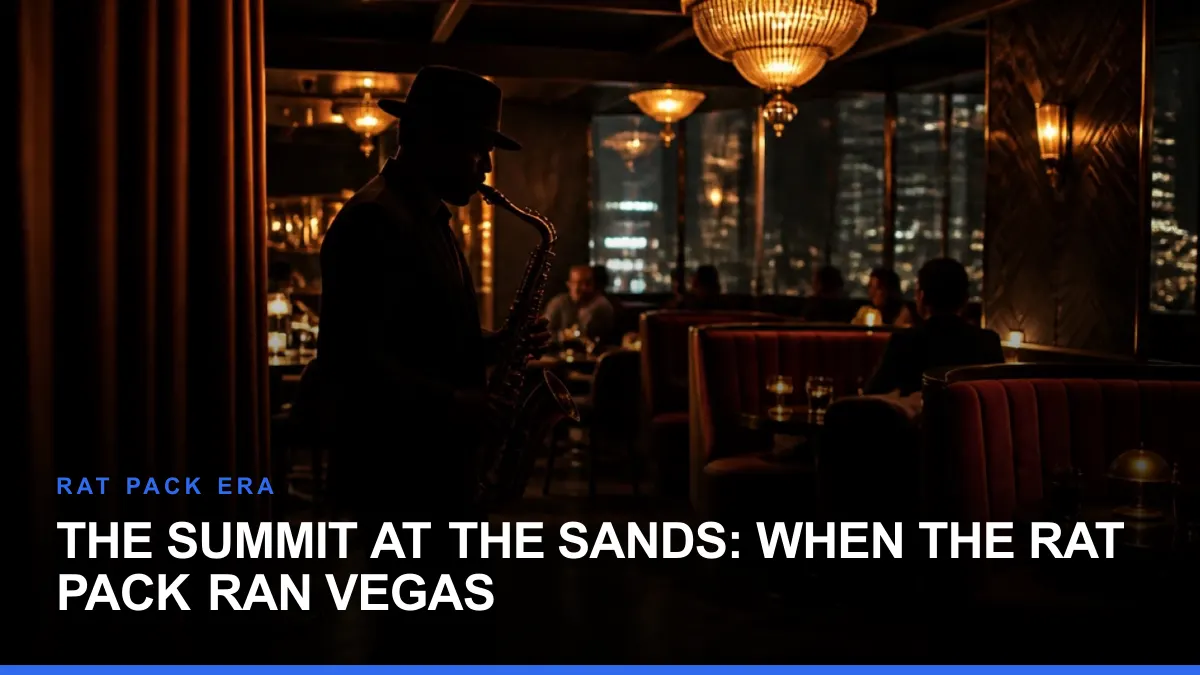
The Summit at the Sands: When the Rat Pack Ran Vegas
For a few weeks in 1960, Sinatra and his friends filmed a movie by day and owned the Copa Room by night. It was the coolest Vegas ever got.